Back to perspectives
PERSPECTIVES
From Eureka to Scale: Inside Earlybird’s AGM 2026
Our AGM 2026 proved Europe has the talent and the tech, though the challenge to scale remains. Our portfolio highlights provided evidence that this challenge is being met head-on. Get behind-the-scenes insights from presenters and panelists at our annual gathering in London.
Nov 10, 2026
8 Min Read
Earlybird News

Share
European venture is growing remarkably.
While AI's share of total VC deal value still trails the US and China, Europe is more diversified across robotics, critical hardware, and space, areas attracting significant investment. Physical AI is playing a key role in this development, supported by Europe's talent and growing focus on energy and compute power.
At Earlybird, we're already positioned to back Europe's most ambitious companies. Our investment approach spans the AI tech stack, from hardware and deeptech to models and infrastructure, supported by our perpetual partnership model, automated workflows, and catalyst program designed to help founders succeed.
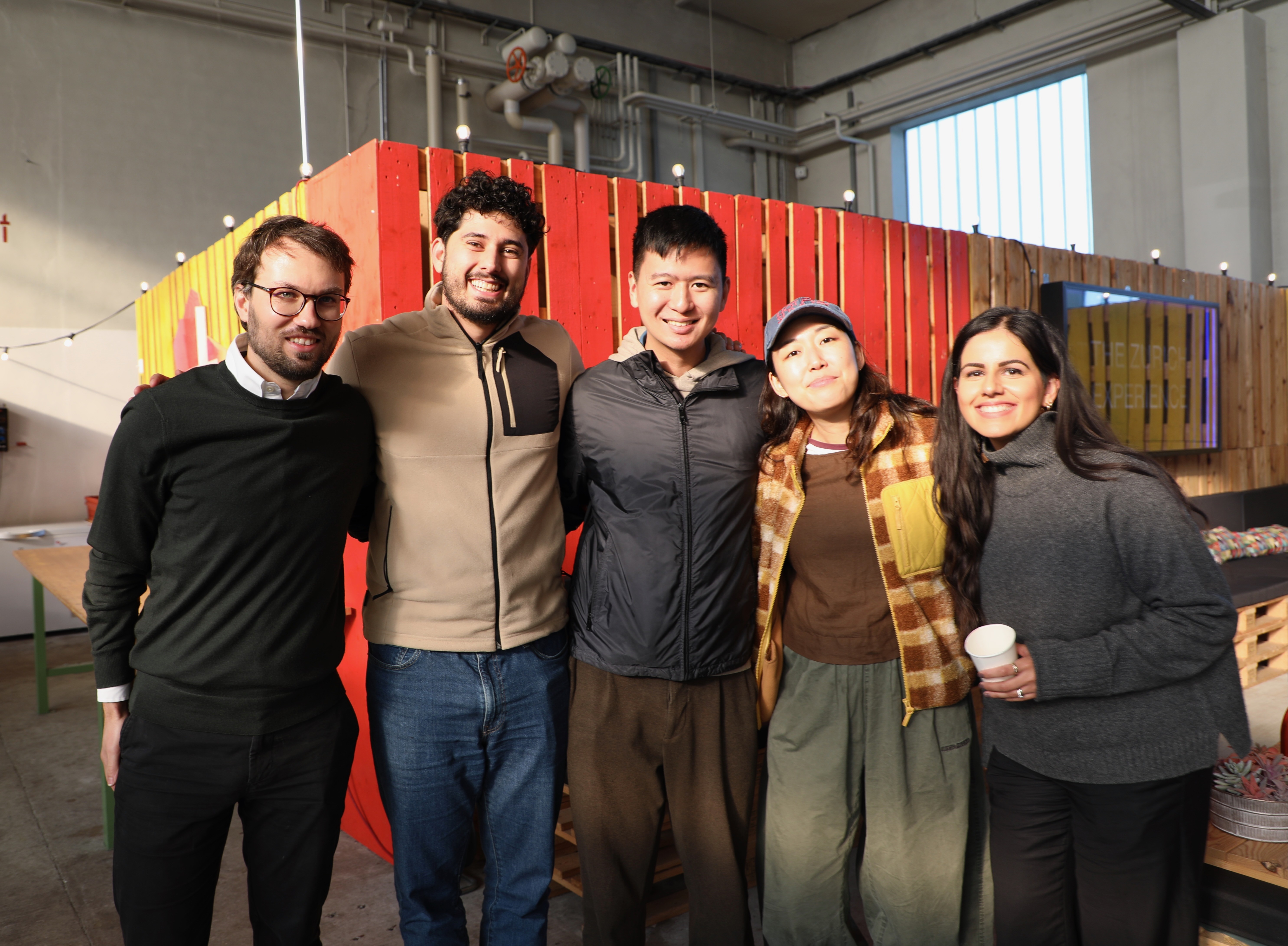
As part of our AGM 2026 held in London, we gathered 130 investors, founders and LPs to gauge the temperature in Europe and share key insights.
Highlights Across the Portfolio Companies
Welcomed by our GPs, the portfolio founders took the stage, starting with Tim Rocktäschel of RSI asking: “What if capable systems improve themselves?” He reflected on knowledge evolution: through the Enlightenment, discoveries, and future-shaping inventions.
Tim drew inspiration from a Stanley and Lehman book, ‘Why Greatness Cannot Be Planned.’ He noted inventions are not invented with the specific invention in mind. If the exponential growth of science will be halted by a lack of human resources, then we need to automate scientific discovery. Meaning we must use frontier models to be so-called Eureka machines. He encouraged tracing the lineage of discoveries while also automating frontier AI R&D.

Matthias Niessner at SpAItial AI treated us to a visual tour of spaces. On the importance of design and simulation, everything we can do in the real world can also be done virtually. By capturing the real world and bridging the virtual via simulated outputs, we open up infinite possibilities of imagination, visualization, problem-solving, and business applications, plus cost savings. He showed what restyling and staging can look like at the next level, where digital copies of spaces create realistic and malleable panoramas, all using precise data. This has positive implications for fields from robotics to real estate and beyond.

Portfolio highlights continued with Italian-based Pillar, the OS for construction. Gabriel Montalvo conveyed how his team is building the AI-Native European assistant for the construction industry. His team focuses on a clear purpose to modernize: “Construction builds everything, but it still runs on pen and paper.” He shared how his team assertively cracks problems for SMBs, not by buying growth but rather by addressing pain points, one country at a time.

From our fintech portfolio, Porters, we saw how to achieve ROI on AI with banks as design partners. Konstantin Kotulla shared that even highly regulated and fast-response situations can be addressed with the right solutions. Examples abound in claims, onboarding, and estate processing. It might not be the sexiest topics, but they involve critical life milestones. Porter’s replaces the outsourcing chaos behind every bank, one process at a time, and every process they add makes the next one easier. Similar to the recursive learning example we started with, intelligence and good decision-making compound.

Til Rochow from Upvest shared how 2026 was a breakthrough year for his company, driven by its mission to democratise access to investing and its North Star of reaching 100 million end users. Drawing on that journey, Til named three key industry developments:
Agentic investing enabled by MCP and API connectivity, with event-driven updates.
Smart wealth with embedded analytics with proprietary and real-time data.
AI-powered operations that streamline background processes.
His key takeaway: “Meaningful AI applications need real-time data and the right investment infrastructure to thrive.”

This diversity of solutions across our portfolio reconfirms AI is never monolithic; rather, the companies using it effectively continue to modernize and advance industries, grow market share, and attract top talent.
Expert Panels Insights: AI Moats and Tech Sovereignty
In a panel on Moats in the Age of AI, led by our Principal Akash Bajwa, invited speakers from industry heavyweights Sierra, Databricks, and Granola explored LLMs and application layers. Three key takeaways:
Rent the intelligence but own the context.
Your moat is your data.
The application layer has the freedom that foundation models don’t have.
They discussed product distribution and sales, plus the importance of deeply understanding how customers think and work. So while sales motion should create alignment for your customer, brand must continue to be a moat. A particularly great sign is when your company name becomes a verb.

Our second panel, led by our Partner Andre Retterath, centered around the key topic of Tech Sovereignty. We heard a dynamic debate from portfolio leaders Oskari Saarenmaa, Heike Freund, and Ilhan Scheer. Together, they covered control over data and cloud, how access to power (data centers) relies on commercialization of energy for compute, and how tech sovereignty means freedom of choice.
“There’s a switch off,” said Ilhan, and if we do not want external forces running that, then we must own and develop our own tech. Oskari pointed out we need to build great companies at scale, and not rely on patriotism but rather create demand for those products and services. In other words, IT is no longer back office; tech is the future ahead of us.

Building hyperscalers in Europe will require access to capital, but it also means relying on ways of winning: solving actual problems and successful pilots at scale. Oskari put it bluntly: “The ecosystem can take a lesson from startups: You either grow, or you die”. So let’s choose growth!
Which gaps to close
In our Partner Christian Nagel’s closing remarks, he reminded us: There is no deep tech gap. Europe may have missed some waves, but the tides are turning; the tailwinds are there. Back to the momentum mentioned earlier, we at Earlybird are covering the entire AI stack, deep tech and more, with examples at every stage and sector, and across multiple funds. We continue to champion our portfolio, who are validating the thesis, demonstrating engineering and market-leading positioning, and creating liquidity opportunities.

If there is a real gap, it is capital, and we are doing something about that, too. We remain structural optimists and see the opportunity ahead as greater than ever. Thank you to all our LPs, founders, and team who joined our AGM, and we look forward to gathering again soon!
PERSPECTIVES
Related articles
Keep up with Earlybird and our portfolio companies.