Back to perspectives
PERSPECTIVES
Rethinking Energy in Space: Why We're Backing ORiS
The biggest opportunities in deep tech often come from questioning assumptions that have gone unchanged for decades. In space, one of those assumptions is how energy is generated and distributed. ORiS is building around a different vision, and it's one we believe has implications far beyond a single application.
Jul 21, 2026
8 Min Read
Portfolio News

Share
Rethinking One of Space's Oldest Constraints
Every satellite launched today is designed around the same principle: it must generate, store, and manage its own energy.
For decades, that principle has shaped the way spacecraft are built. Solar panels, batteries, and carefully managed power budgets determine how satellites are designed, what payloads they can carry, and how long they remain operational. Yet while launch capabilities, onboard computing and satellite technology have advanced rapidly, the underlying model for supplying energy has remained largely unchanged.
As spacecraft become more capable and increasingly compute-intensive, the conversation is beginning to shift from how much energy a satellite can produce to how energy itself can be delivered. ORiS is building around that idea, developing wireless power transmission technology that reimagines one of the most fundamental building blocks of space infrastructure.
From Standalone Spacecraft to Connected Energy Networks
Much like communication evolved from isolated systems into globally connected networks, ORiS believes energy in space will eventually follow a similar path.
Its laser-based wireless power transmission technology is designed to transfer energy between satellites and, over time, to drones and lunar infrastructure without physical connections. Rather than treating every spacecraft as a closed energy system, ORiS envisions orbital infrastructure wherever power can be distributed dynamically, allowing satellites to access energy when they need it, instead of relying solely on what they can generate themselves.
The implications reach far beyond extending battery life. Greater flexibility in energy availability influences everything from payload operations and onboard computing to mission duration and overall spacecraft design. As satellite constellations continue to expand and AI-driven workloads increase, energy is becoming a strategic resource that will shape the next generation of orbital services.
Building for Where the Industry Is Going
Infrastructure businesses are often built years before the need for them becomes obvious.
The rapid expansion of Low Earth Orbit (LEO) constellations, growing investment in autonomous defence systems, and renewed momentum around lunar exploration all point toward a future in which reliable access to power becomes increasingly important. These developments are unfolding simultaneously, placing greater demands on existing energy architectures and creating room for entirely new approaches to energy distribution.
We see ORiS as a company building with that long-term direction in mind. Its technology is intended to serve multiple environments using the same core capabilities, creating a platform that can evolve alongside the broader space ecosystem rather than solving a single, isolated use case.
A Team Capable of Building Deep Infrastructure
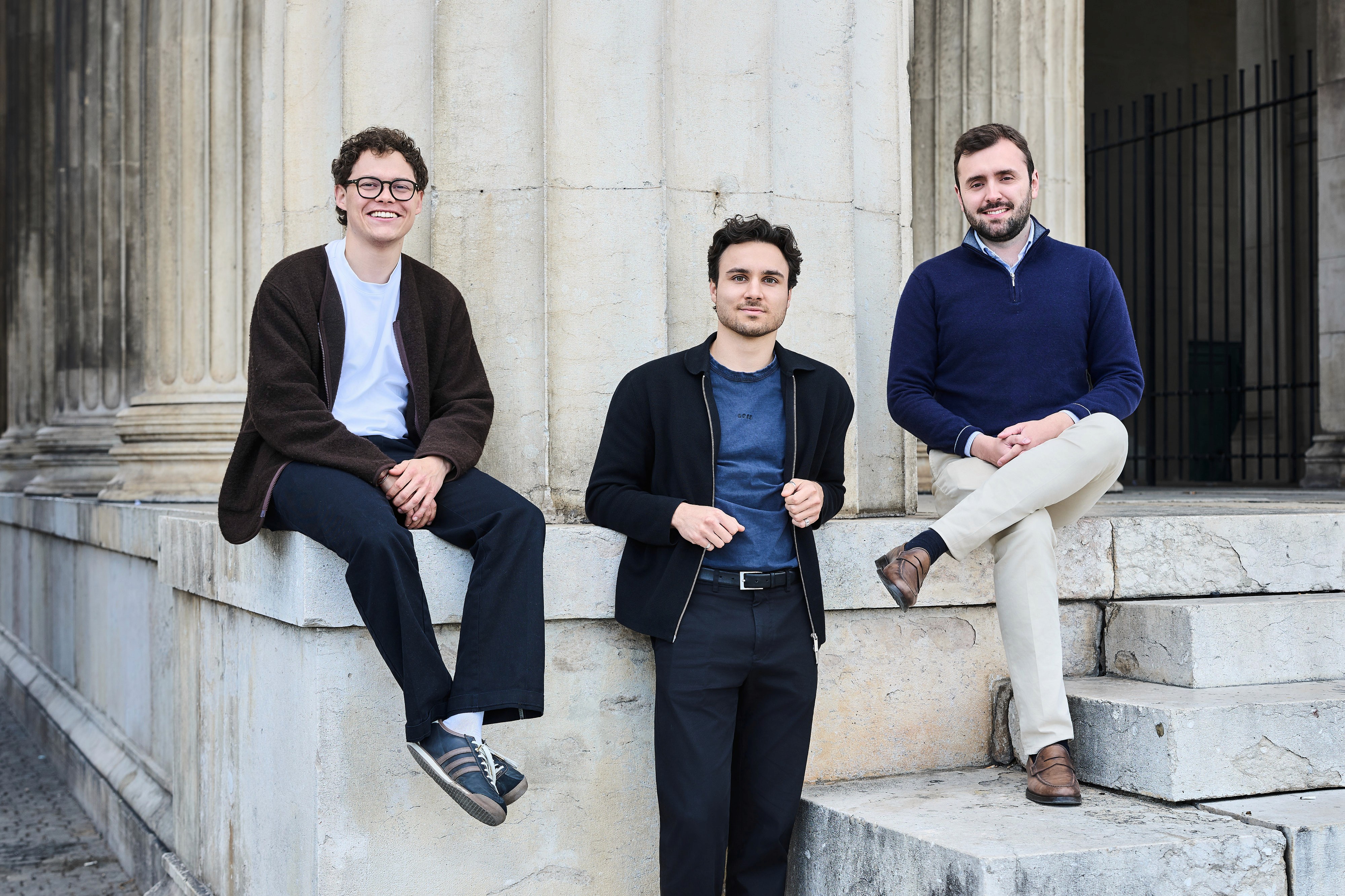
ORiS brings together expertise across aerospace engineering, photonics, orbital systems, and commercialization. Andrea Villa, Anna Mauro, Domenico Edoardo Sfasciamuro, and Francesco Lopez have built the company on years of research originating at Politecnico di Torino, supported by Professor Stefano Mauro, whose work laid the scientific foundations for the technology.
Equally important is the pace at which the team has translated research into execution. In a relatively short period of time, ORiS has demonstrated wireless power transfer to a hovering drone, advanced toward its first in-orbit demonstration and established collaborations with organizations including Thales Alenia Space, ESA BIC, NATO DIANA, Telespazio, DCUBED and DOrbit. Those partnerships reflect both technical credibility and an ability to navigate the highly specialized aerospace ecosystem from an early stage.
Another element of the company's strategy resonated strongly with us. Alongside its long-term orbital vision, ORiS is developing LOONA, a wireless power platform for drones that applies the same underlying laser transmission technology in a terrestrial environment. Faster development cycles enable the team to validate critical subsystems, refine performance and generate practical operational experience while continuing to build toward its broader vision for space.
This combination of long-term ambition and disciplined execution is exactly what we look for in deep-tech founders tackling infrastructure problems with decade-long horizons.
Looking Ahead
For much of the history of spaceflight, every spacecraft has been expected to operate as an independent energy system. That assumption made sense in an era defined by individual missions and relatively simple satellites. The next chapter of the space economy will be shaped by dense constellations, autonomous systems and permanent infrastructure extending beyond Earth's orbit, all of which place fundamentally different demands on how energy is generated, managed and distributed.
ORiS is developing technology that responds to that shift. By enabling wireless power transmission across satellites, drones and, eventually, lunar assets, the company is laying the foundations for a more connected approach to energy in space. If successful, the impact extends well beyond longer mission lifetimes. It has the potential to influence how spacecraft are designed, how orbital services operate, and how future infrastructure is built across multiple domains.
Building foundational infrastructure takes time, particularly in industries where technical validation, institutional trust and long development cycles are part of the process. We believe ORiS combines the scientific depth, engineering capability and long-term vision required to build a company that can help define this emerging category, and we're proud to support the team as they pursue it.
Read more about them in Tech EU, EU-Startups, and SpaceNews.
PERSPECTIVES
Related articles
Keep up with Earlybird and our portfolio companies.